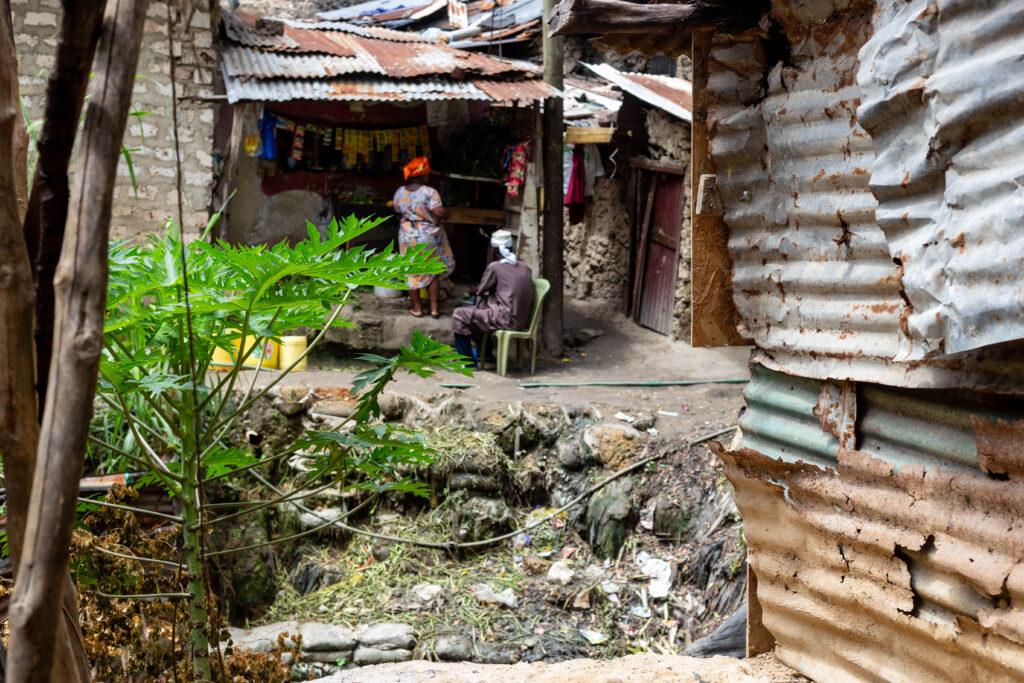
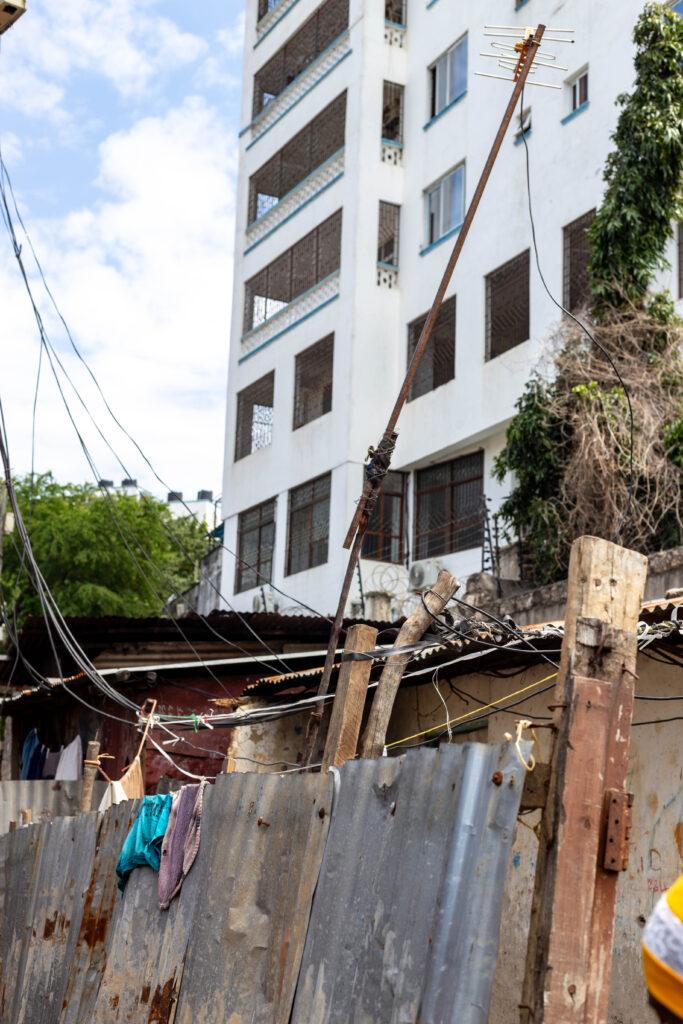
Right in the middle of our beautiful Mombasa city, hides away an urban slum with the name ‘Mburukenge’, which is a Swahili word for monitor lizards. It was named so because several years back, the area had a lot of monitor lizards roaming around. Thankfully not anymore. The Mburukenge slum has a population of about 3000 people and approximately 872 households. As you pass by the roadside off Buxton, you can hardly tell that one of those entrances lead to a slum area. Like many slums, Mburukenge is characterized by homes with rusty iron sheets, limited access to basic services, environmental challenges and high poverty rates. However, you can still feel the positivity and life that is in that shanty region, as you can see domestic birds roaming freely, you can hear the children playing happily, and you can have a glimpse of the very social community going on with their daily activities.
Sad to say, as you walk through the slum, what is most constant and glaring is the uninterrupted trench that is filled with waste and dirty water. This is the biggest sign of the poor sanitation and lack of proper waste management in the area, which usually leads to environmental problems and health risks. But here is the catch, all that waste is a collection of the trash coming from the homes and regions surrounding the slum, including nearby town areas and schools.
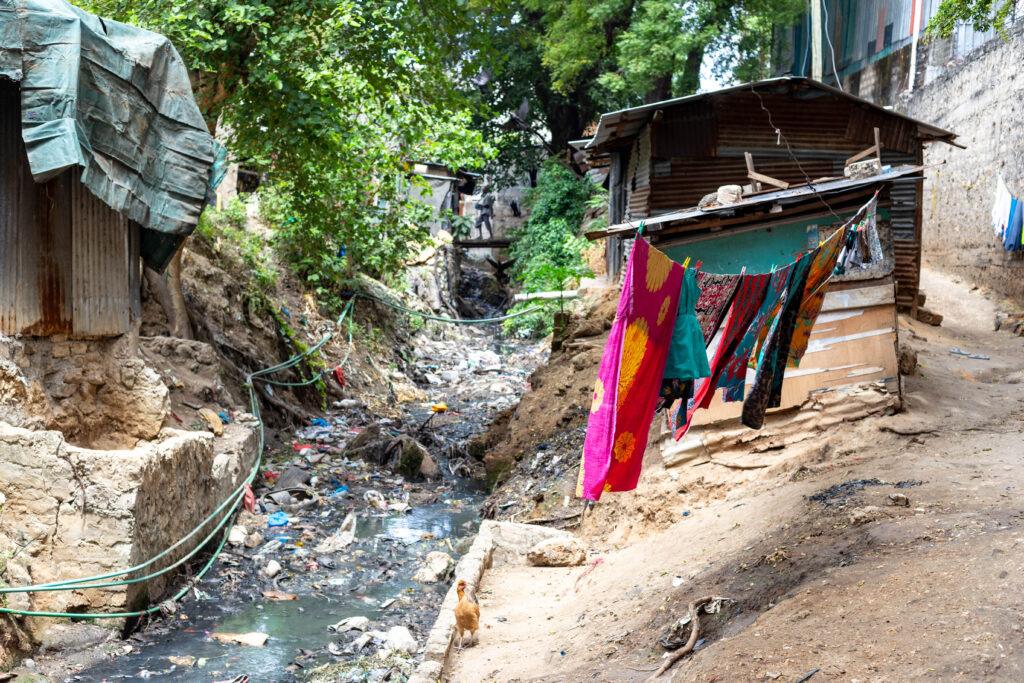
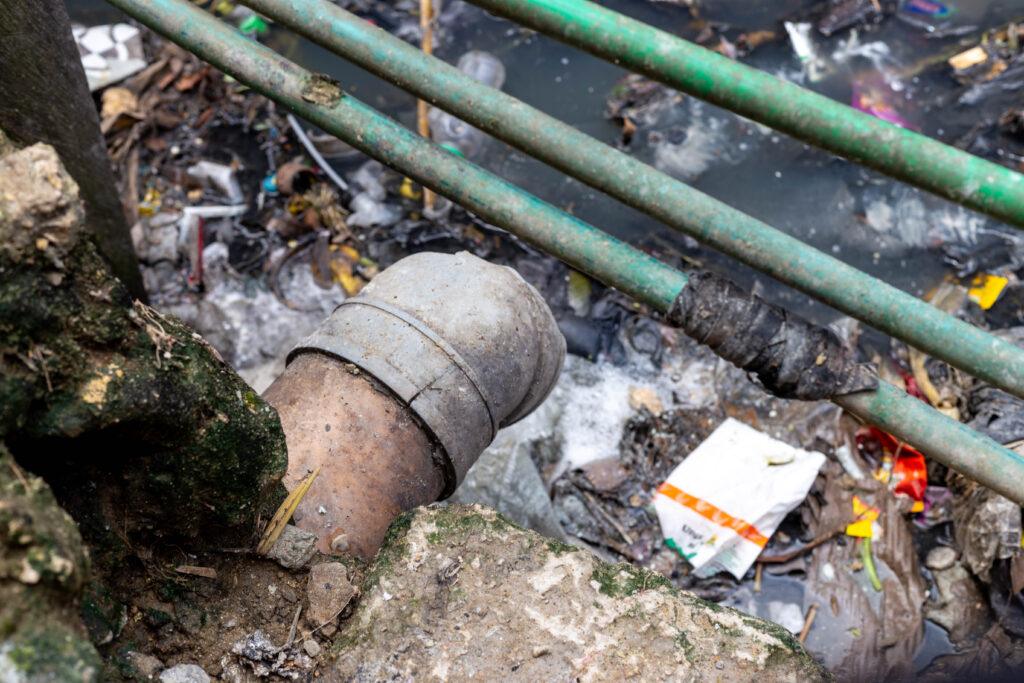
Poor waste management causes an array of environmental problems, including pollution of air, water, and soil, as well as harming our ecosystems and human health. Let’s not forget that when the organic waste decomposes, it releases methane, a potent greenhouse gas that contributes towards climate change. Another significant challenge the residents claim to face, is lack of access to clean water. They do have some pipes carrying clean water, shallowly covered in the ground or out in the open, but sadly, the water is not always consistent. Worst of it all, the clean water pipes sometimes get contaminated by the sewage pipes passing through the same ground from nearby houses. This especially happens when there are leaks, breaks, or improper installation, leading to further health hazards.
But is there any hope for Mburukenge region? Yes, yes there is. We have organizations such as Mission Relief and Humanity link agency donating thousands of litres of clean water, and groups such as Sparkling Minds Association partnering with the Mombasa county library offering books to children and youth. However, these all sound like temporary solutions; and that is why ‘Burukenge Waste Managers’ was formed. This is a group made up of youth and young adults living in this same slum, who committed to actively participate in solving the problems their community face and protect their environment. This group organizes garbage collection, community cleanups, and create awareness around better environment habits within their community. Indeed, they are the poster child of finding opportunity in their problems, because they go further to sort the waste they collect into different materials like plastics, cans, paper and glass, and with the help of a buy-back center, recycle the waste to provide an income source for themselves.
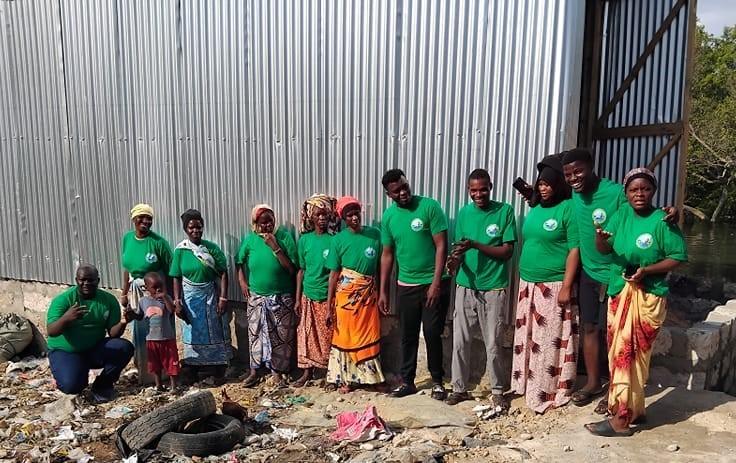
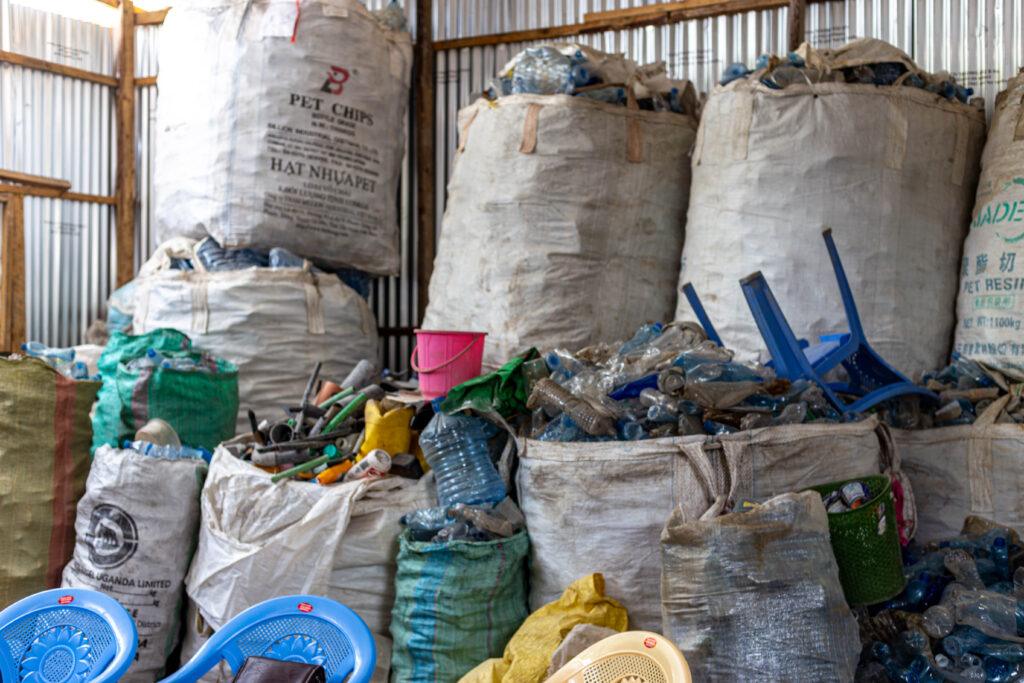
To pay it forward, the Burukenge waste managers’ buy-back centre, where they recycle the waste, occasionally donate food, books and uniforms to the region through the group. Last month, Burukenge waste managers members started a briquettes project that sells ecofriendly alternatives to charcoal for domestic use. As well, the youth group was involved in helping plant and manage the mangrove trees at the seashore, which play a big role in preventing the ocean water from destroying their homes, and all the waste from flowing into their side of Indian Ocean. In July, the group also started planting and selling mangrove seedlings, to add to the income sources of the youth from the region.
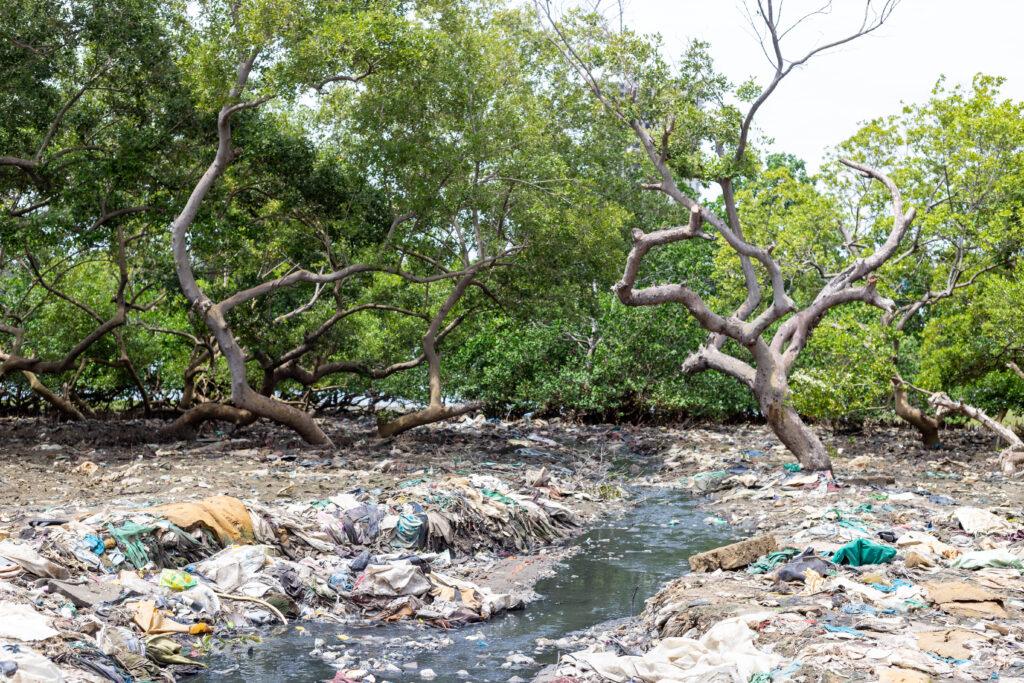
When you speak to Moses Mkala, the chairperson of the Burukenge waste managers, you can hear the despair they have regarding the state of their environment, but you can also hear the hope they have in realizing the inert power of solving the problems they face. That aside, the big trench of waste that goes all the way to the ocean still exists, the poor pipes installation plan is still a problem, and the fear of health risks to the residents and especially children of the region is still felt. All in all, a lot more can be done. I hope that more sustainable actions would be taken by different stakeholders to protect the environment and the community of Mburukenge. Not enough cleanups can solve the glaring waste problem they face, especially because of the continuous poor waste management from the surrounding areas. It is clear, our city could use some awareness of better waste management practices, and construction of better waste management systems.
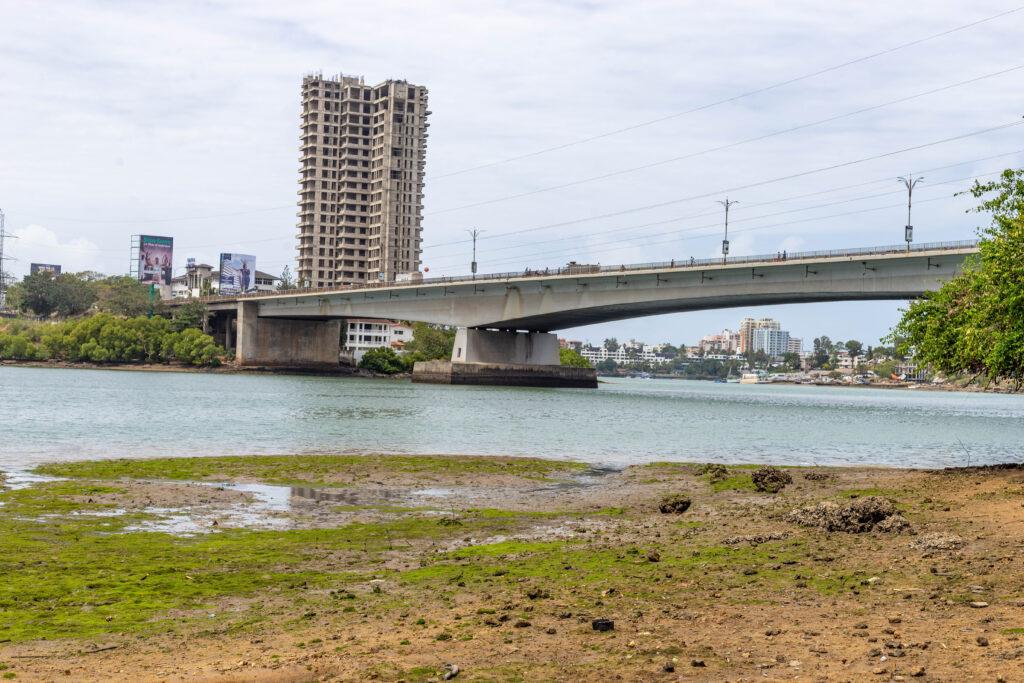
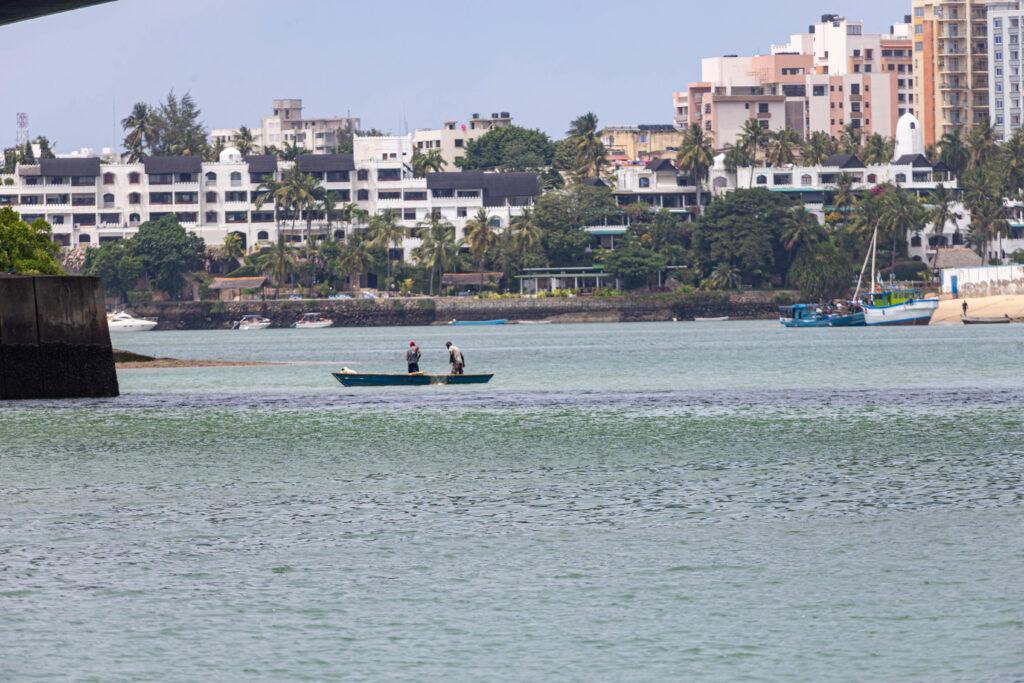
At the end of the day, what affects Mburukenge slums, also affects us as a whole. It’s our responsibility to take care of each other and our environment. There is this beautiful view I saw after walking all the way through the slum to where it ended. On the other side of the mangrove trees, that seem to be holding off the heaps of waste, lies a breathtaking view of the ocean and the Nyali bridge. You can see the beautiful coastal houses on the other side and fishermen rowing their boats in the middle of the water.
Don’t we want to protect this?
Story and Photos by Zainab Mejja
What an amazing well written article. Thank you for educating us!
Very good
Awesome post
Good